Wireless-Bridge-Cross-Yellow-River-Project
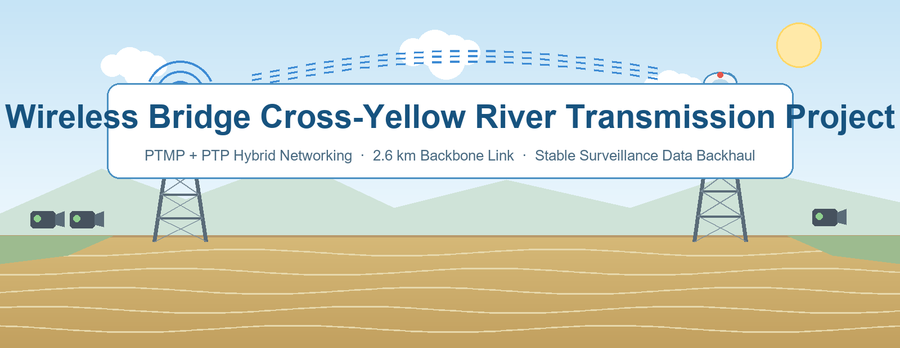
Wireless Bridge Cross-Yellow River Transmission Project
Bridging the Yellow River wirelessly; connecting surveillance on both banks with data.
1. Project Background
The cabling conditions on both banks of a certain Henan section of the Yellow River are complex. Traditional fiber-optic solutions face challenges such as long construction periods, difficult cross-river protection, and high maintenance costs.
This project adopts a PTMP (Point-to-Multi-Point) + PTP (Point-to-Point) hybrid networking architecture:
- One 802.11AX wireless bridge serves as the central AP.
- Three 802.11AC wireless bridges are connected below it.
- Multi-site surveillance video is aggregated at the central AP.
- Data is backhauled to the management node via a PTP backbone link and finally integrated into the fiber-optic network.
2. Solution Highlights
- Easy deployment and flexible expansion — The central AP covers multiple remote sites simultaneously; adding new surveillance points only requires installing additional remote bridges.
- Protocol compatibility and investment protection — AX and AC bridges are deployed together, allowing existing equipment to be connected directly and reducing upgrade costs.
- Long-distance backhaul — The backbone link uses high-performance bridges, easily covering the 2.6 km cross-river distance.
- Maintenance-friendly — Full-link visualization, simple on-site installation structure, and efficient routine inspections.
3. Site & Surveillance Deployment
| Site Name | Camera Count | Access Method |
|---|---|---|
| Monitor Point 1 | 2 | PTMP Remote Bridge |
| Monitor Point 2 | 2 | PTMP Remote Bridge |
| Monitor Point 3 | 1 | PTMP Remote Bridge |
| Monitor Point 4 | 1 | PTP Remote Bridge |
| Total | 6 | — |
Video data collected from each site is aggregated at the central AP and then backhauled to the fiber-optic access point via the backbone link.
4. Transmission Link Parameters
| Link Type | Device Model | Distance | Description |
|---|---|---|---|
| Backbone Link | WIS-D523AC | 2.6 km | Cross-river point-to-point backhaul, stably carrying multiple video streams |
| Branch 1 | 802.11AX Bridge | 100 m | Near-end site access |
| Branch 2 | 802.11AC Bridge | 600 m | Mid-range site access |
| Branch 3 | 802.11AC Bridge | 1.5 km | Far-end site access |
5. Site Photos & Networking Diagrams
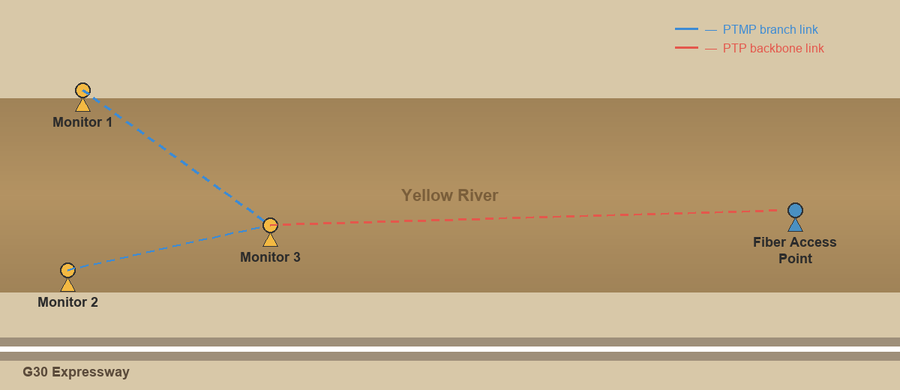
Figure 1 — Actual Equipment Deployment: Remote cameras are connected to the central station through PTMP bridges for video aggregation.
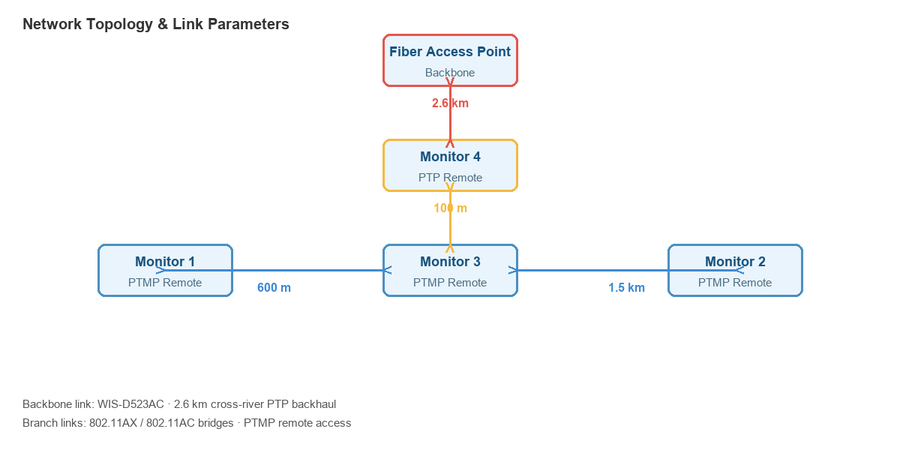
Figure 2 — Network Topology: The WIS-D523AC backbone link provides 2.6 km cross-river backhaul, while three branch links cover 100 m, 600 m, and 1.5 km respectively.
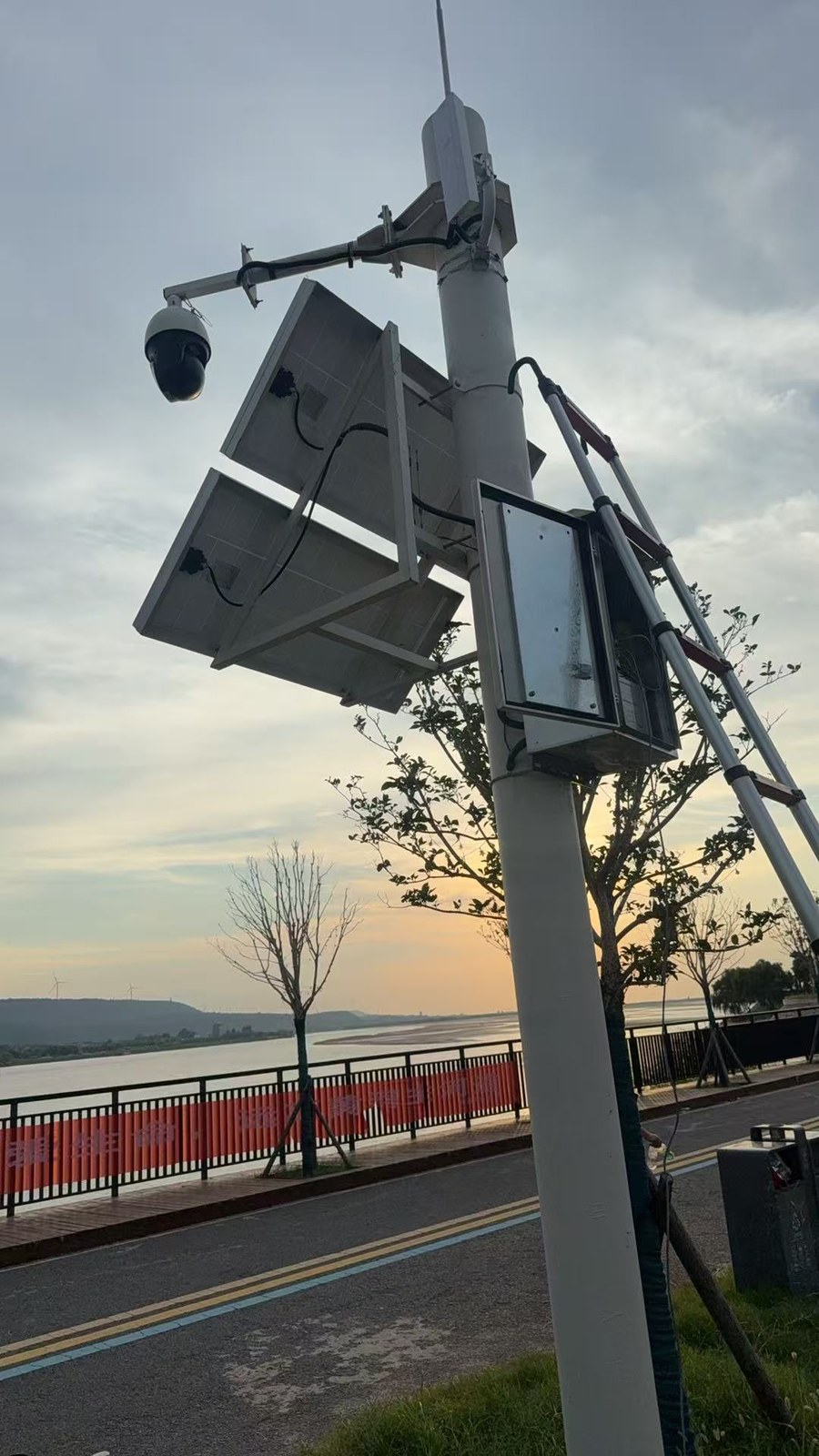
Figure 3 — AP Bridge On-Site: The 802.11AX central station is solidly installed with antennas precisely aligned to remote sites.
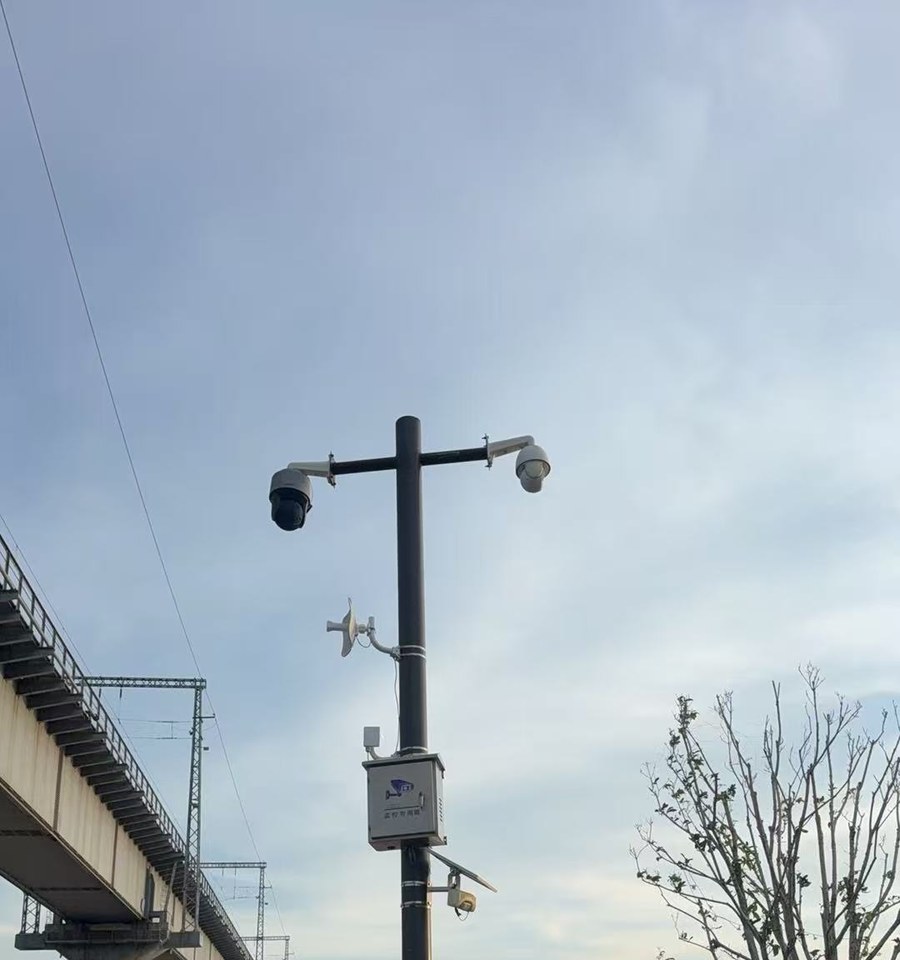
Figure 4 — Client Equipment Installation: The remote 802.11AC bridge is wired according to standard, clearly labeled, and easy to maintain.
6. Summary & Application Recommendations
Through the three-tier architecture of "Central AP + PTMP Remote Access + PTP Cross-River Backhaul," this project realized low-cost, high-efficiency aggregation of six surveillance video streams across both banks of the Yellow River using only a small number of wireless bridges, fully validating the deployment value of wireless bridging in complex geographical environments.
If you are planning a similar project, the following recommendations are for your reference:
- Line-of-Sight — The cross-river link must ensure no obstruction between antennas; avoid signal attenuation caused by trees, ship masts, etc.
- Frequency Selection — Choose channels with less interference according to the on-site electromagnetic environment; use the 5 GHz band if necessary to increase bandwidth.
- Proper Protection — Outdoor bridges and cable connectors should be waterproof, lightning-proof, and salt-spray resistant to extend equipment service life.
- Stable Power Supply — It is recommended to use centralized PoE power supply with UPS or solar solutions to improve system reliability.
We believe this solution can provide a replicable reference for more scenarios where "natural barriers become throughways."